
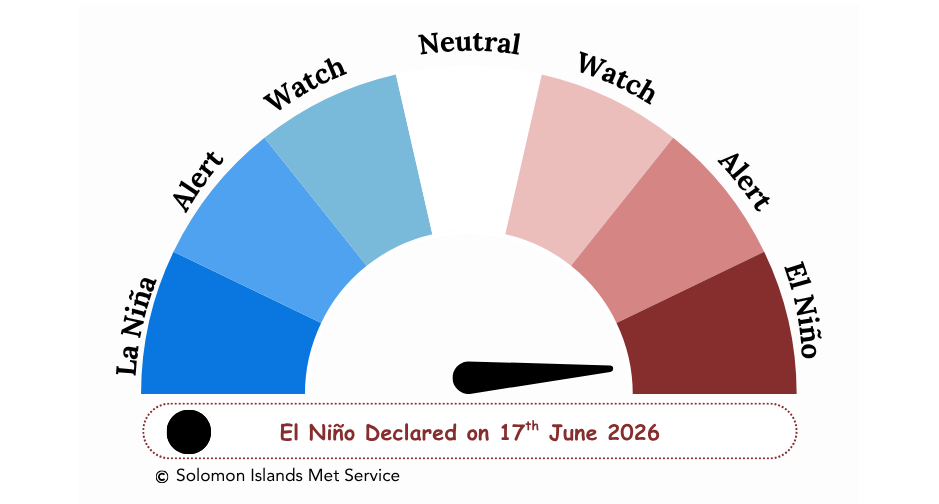
CURRENT ENSO STATUS: Based on ENSO analysis presented on 11 August 2026:
El Niño is firmly established in the tropical Pacific, including the Solomon Islands.
Oceanic and atmospheric indicators reflect values consistent with a strong El Niño, with further intensification in the remaining months of 2026
Sea surface temperatures (SSTs) anomaly in the central Pacific for the week ending 9th August 2026 is +2.20 °C, well above the +0.80 °C threshold.
ENSO OUTLOOK: Potential Impacts
Forecasts point to a historic El Niño, with central Pacific Ocean temperatures projected to peak above any levels observed since 1950.
Global climate models suggest a strong El Niño as the tropical Pacific continues warming through the end of 2026, likely to peak during December 2026 to February 2027.
Below-normal rainfall will lower river and stream flows, creating stagnant pools which will accelerate mosquito breeding and heighten malaria transmission risks in densely populated areas.
Low rainfall can lead to shortage of drinking water, particularly in communities that rely heavily on rainwater tanks or a single water source.
Low rainfall may negatively impact agricultural yield, water storage, health, livelihood, education, tourism, and other key sectors.
The severe 1997/98 El Niño drought provides a historical example, with significant impacts reported across Western, Rennell & Bellona, Isabel, Malaita and other parts of the Solomon Islands.