
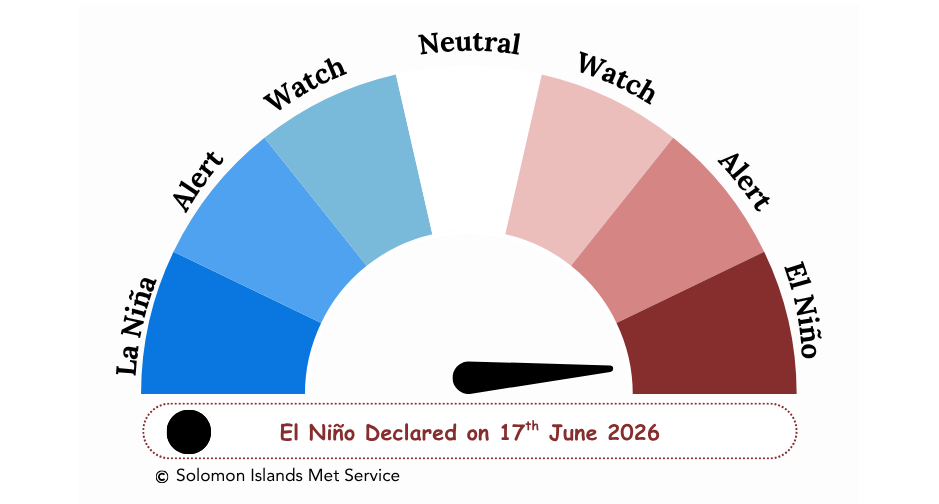
CURRENT ENSO STATUS: Based on ENSO analysis presented on 15 September 2026:
El Niño is firmly established in the tropical Pacific, including the Solomon Islands.
Both oceanic and atmospheric indices reflect values consistent with a strong El Niño, with further intensification likely towards end of 2026
Sea surface temperatures (SSTs) anomaly in the central Pacific for the week ending 13 September 2026 is +2.51 °C, well above the El Niño threshold (+0.80 °C).
ENSO OUTLOOK:
Forecasts indicate continued warming, with temperatures likely to peak in late 2026 into 2027, with possibly reaching levels above the warmest observed since reliable records began in 1950.
Given its current strength and the typical life cycle of El Niño, this event is expected to persist into March to May 2027.
Potential IMPACTS of El Niño
Overall, El Niño conditions are associated with “Below Normal or Reduced Rainfall” in the Solomon Islands’ monthly rainfall record.
Strong El Niño conditions may increase the risk of “meteorological drought”, with prolonged periods of below-normal rainfall, potentially falling below 10% of the historical record.
El Niño conditions may influence Tropical Cyclone Activity in the Solomon Islands region.
Rainfall during El Niño events may not be enough to meet the demand for water or prevent drought impacts. Communities should prepare and use available water wisely.
Sectorial Impacts of El Niño
Health sector & Below-normal Rainfall
Reduced rainfall lowers river and stream flows, allowing stagnant pools to form in estuaries and at river mouths. Such pools provide favorable breeding conditions for mosquitoes, raising the risk of malaria transmission in communities and urban centers.
Reduced water availability often forces communities to rely on unsafe or contaminated water sources, increasing the risk of waterborne and diarrheal diseases such as cholera, typhoid, and dysentery.
Water scarcity can also compromise personal hygiene and sanitation practices, contributing to the spread of skin infections, eye infections (such as trachoma), and other hygiene-related illnesses.
Health facilities may face operational challenges, as hospitals and clinics that depend on consistent water supply for cleaning, sterilization, and sanitation may struggle to maintain safe standards of care.
Water Sector & Below-normal Rainfall
Below-normal rainfall or prolonged periods of low rainfall can lead to drinking water shortages, particularly for communities that rely heavily on limited or single water sources, and those that depend on rainwater collection (e.g., water tanks).
Below-normal rainfall may force women and children to travel longer distances to collect water, increasing time, physical demands, and exposure to safety risks, while reducing time available for school, work, and other essential activities.
Food Security & Below-Normal rainfall
Low rainfall may negatively impact agricultural yield by limiting soil moisture during key crop growth stages, leading to reduced harvest volumes and, in severe cases, crop failure. This risk is heightened for farmers who depend on rain-fed agriculture and lack access to irrigation.
Reduced availability of water for irrigation and livestock, particularly where farming depends on rainfall, rivers, streams, or stored water.
Increased risk of pests and crop diseases as changing temperature and moisture conditions affect agricultural systems.
Higher food prices may occur if local production falls and communities become more dependent on purchased or imported food.
Classical Example of Past El Niño
The severe 1997/98 El Niño drought provides a historical example, with significant impacts reported across Western, Rennell & Bellona, Isabel, Malaita and other parts of the Solomon Islands.